Showing posts with label Southern. Show all posts

Monday, June 4, 2012

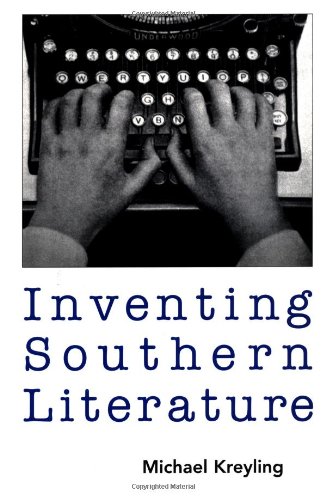
Inventing Southern Literature For Sale


Inventing Southern Literature | | Reviews


>>>Order Now at Amazon<<<


Inventing Southern Literature Reviews


Product Overview


"I take...an outward route, arguing that the Agrarian project was and must be seen as a willed campaign on the part of one elite to establish and control 'the South' in a period of intense cultural maneuvering. The principal organizers of I'll Take My Stand knew full well there were other 'Souths' than the one they touted; they deliberately presented a fabricated South as the one and only real thing."

In Inventing Southern Literature Michael Kreyling casts a penetrating ray upon the traditional canon of southern literature and questions the modes by which it was created. He finds that it was, indeed, an invention rather than a creation. In the 1930s the foundations were laid by the Fugitive-Agrarian group, a band of poet-critics that wished not only to design but also to control the southern cultural entity in a conservative political context. From their heyday to the present, Kreyling investigates the historical conditions under which literary and cultural critics have invented "the South" and how they have chosen its representations. Through his study of these choices, Kreyling argues that interested groups have shaped meanings that preserve "a South" as "the South."

As the Fugitive-Agrarians molded the region according to their definition in I'll Take My Stand, they professed to have developed a critical method that disavowed any cultural or political intent or content, a claim that Kreyling disproves. He shows that their torch was taken by Richard Weaver on the Right and Louis D. Rubin, Jr., on the Center-Left and that both critics tried to preserve the Fugitive-Agrarian credo despite the severe stresses imposed during the era of desegregation.

As the southern literary paradigm has been attacked and defended, certain issues have remained in the forefront. Kreyling takes on three:

  1. reconciling the imperatives of race with the traditional definitions of the South;
  2. testing the ways white women writers of the South have negotiated space within or outside the paradigm; and
  3. analyzing the critics' use and abuse of William Faulkner (the major figure of southern literature) as they have relied on his achievement to anchor the total project called Southern Literature.


Michael Kreyling, a professor of English at Vanderbilt University, is the author of several books, including Eudora Welty's Achievement of Order and Author and Agent: Eudora Welty and Diarmuid Russell.


My Page is a participant in the Amazon Services LLC Associates Program, an affiliate advertising program designed to provide a means for sites to earn advertising fees by advertising and linking to amazon.com

Related : Peruvian Lilies La Car Rental Cochlear Implants Casio Shock Logitech Ipod Dock

Thursday, May 31, 2012

Southern Frontier Humor: An Anthology For Sale


Southern Frontier Humor: An Anthology | | Reviews


>>>Order Now at Amazon<<<


Southern Frontier Humor: An Anthology Reviews


Product Overview


If, as some suggest, American literature began with Huckleberry Finn, then the humorists of the Old South surely helped us to shape that literature. Twain himself learned to write by reading the humorists’ work, and later writers were influenced by it. This book marks the first new collection of humor from that region published in fifteen years—and the first fresh selection of sketches and tales to appear in over forty years.
            Thomas Inge and Ed Piacentino bring their knowledge of and fondness for this genre to a collection that reflects the considerable body of scholarship that has been published on its major figures and the place of the movement in American literary history. They breathe new life into the subject, gathering a new selection of texts and adding Twain—the only major American author to contribute to and emerge from the movement—as well as several recently identified humorists.
            All of the major writers are represented, from Augustus Baldwin Longstreet to Thomas Bangs Thorpe, as well as a great many lesser-known figures like Hamilton C. Jones, Joseph M. Field, and John S. Robb. The anthology also includes several writers only recently discovered to be a part of the tradition, such as Joseph Gault, Christopher Mason Haile, James Edward Henry, and Marcus Lafayette Byrn, and features authors previously overlooked, such as William Gilmore Simms, Ham Jones, Orlando Benedict Mayer, and Adam Summer.
Selections are timely, reflecting recent trends in literary history and criticism sensitive to issues of gender, race, and ethnicity. The editors have also taken pains to seek out first printings to avoid the kinds of textual corruptions that often occur in later versions of these sketches. Southern Frontier Humor offers students and general readers alike a broad perspective and new appreciation of this singular form of writing from the Old South—and provides some chuckles along the way.


My Page is a participant in the Amazon Services LLC Associates Program, an affiliate advertising program designed to provide a means for sites to earn advertising fees by advertising and linking to amazon.com

My Links : La Car Rental Cochlear Implants Barbie Furniture Otterbox For Thunderbolt

Sunday, May 13, 2012

Southern Frontier Humor: An Anthology For Sale


Southern Frontier Humor: An Anthology | | Reviews


>>>Order Now at Amazon<<<


Southern Frontier Humor: An Anthology Reviews


Product Overview


If, as some suggest, American literature began with Huckleberry Finn, then the humorists of the Old South surely helped us to shape that literature. Twain himself learned to write by reading the humorists’ work, and later writers were influenced by it. This book marks the first new collection of humor from that region published in fifteen years—and the first fresh selection of sketches and tales to appear in over forty years.
            Thomas Inge and Ed Piacentino bring their knowledge of and fondness for this genre to a collection that reflects the considerable body of scholarship that has been published on its major figures and the place of the movement in American literary history. They breathe new life into the subject, gathering a new selection of texts and adding Twain—the only major American author to contribute to and emerge from the movement—as well as several recently identified humorists.
            All of the major writers are represented, from Augustus Baldwin Longstreet to Thomas Bangs Thorpe, as well as a great many lesser-known figures like Hamilton C. Jones, Joseph M. Field, and John S. Robb. The anthology also includes several writers only recently discovered to be a part of the tradition, such as Joseph Gault, Christopher Mason Haile, James Edward Henry, and Marcus Lafayette Byrn, and features authors previously overlooked, such as William Gilmore Simms, Ham Jones, Orlando Benedict Mayer, and Adam Summer.
Selections are timely, reflecting recent trends in literary history and criticism sensitive to issues of gender, race, and ethnicity. The editors have also taken pains to seek out first printings to avoid the kinds of textual corruptions that often occur in later versions of these sketches. Southern Frontier Humor offers students and general readers alike a broad perspective and new appreciation of this singular form of writing from the Old South—and provides some chuckles along the way.


My Page is a participant in the Amazon Services LLC Associates Program, an affiliate advertising program designed to provide a means for sites to earn advertising fees by advertising and linking to amazon.com

Visit : Alkaline Foods London Flats For Sale Coach Purses For Sale Baron Baptiste Yoga

Monday, May 7, 2012

Inventing Southern Literature For Sale


Inventing Southern Literature | | Reviews


>>>Order Now at Amazon<<<


Inventing Southern Literature Reviews


Product Overview


"I take...an outward route, arguing that the Agrarian project was and must be seen as a willed campaign on the part of one elite to establish and control 'the South' in a period of intense cultural maneuvering. The principal organizers of I'll Take My Stand knew full well there were other 'Souths' than the one they touted; they deliberately presented a fabricated South as the one and only real thing."

In Inventing Southern Literature Michael Kreyling casts a penetrating ray upon the traditional canon of southern literature and questions the modes by which it was created. He finds that it was, indeed, an invention rather than a creation. In the 1930s the foundations were laid by the Fugitive-Agrarian group, a band of poet-critics that wished not only to design but also to control the southern cultural entity in a conservative political context. From their heyday to the present, Kreyling investigates the historical conditions under which literary and cultural critics have invented "the South" and how they have chosen its representations. Through his study of these choices, Kreyling argues that interested groups have shaped meanings that preserve "a South" as "the South."

As the Fugitive-Agrarians molded the region according to their definition in I'll Take My Stand, they professed to have developed a critical method that disavowed any cultural or political intent or content, a claim that Kreyling disproves. He shows that their torch was taken by Richard Weaver on the Right and Louis D. Rubin, Jr., on the Center-Left and that both critics tried to preserve the Fugitive-Agrarian credo despite the severe stresses imposed during the era of desegregation.

As the southern literary paradigm has been attacked and defended, certain issues have remained in the forefront. Kreyling takes on three:

  1. reconciling the imperatives of race with the traditional definitions of the South;
  2. testing the ways white women writers of the South have negotiated space within or outside the paradigm; and
  3. analyzing the critics' use and abuse of William Faulkner (the major figure of southern literature) as they have relied on his achievement to anchor the total project called Southern Literature.


Michael Kreyling, a professor of English at Vanderbilt University, is the author of several books, including Eudora Welty's Achievement of Order and Author and Agent: Eudora Welty and Diarmuid Russell.


My Page is a participant in the Amazon Services LLC Associates Program, an affiliate advertising program designed to provide a means for sites to earn advertising fees by advertising and linking to amazon.com

My Links : Cochlear Implants La Car Rental Peruvian Lilies Pampered Chef Cookbooks Otterbox Htc Thunderbolt

Saturday, February 18, 2012

Inventing Southern Literature For Sale


Inventing Southern Literature | | Reviews


Product Overview


"I take...an outward route, arguing that the Agrarian project was and must be seen as a willed campaign on the part of one elite to establish and control 'the South' in a period of intense cultural maneuvering. The principal organizers of I'll Take My Stand knew full well there were other 'Souths' than the one they touted; they deliberately presented a fabricated South as the one and only real thing."

In Inventing Southern Literature Michael Kreyling casts a penetrating ray upon the traditional canon of southern literature and questions the modes by which it was created. He finds that it was, indeed, an invention rather than a creation. In the 1930s the foundations were laid by the Fugitive-Agrarian group, a band of poet-critics that wished not only to design but also to control the southern cultural entity in a conservative political context. From their heyday to the present, Kreyling investigates the historical conditions under which literary and cultural critics have invented "the South" and how they have chosen its representations. Through his study of these choices, Kreyling argues that interested groups have shaped meanings that preserve "a South" as "the South."

As the Fugitive-Agrarians molded the region according to their definition in I'll Take My Stand, they professed to have developed a critical method that disavowed any cultural or political intent or content, a claim that Kreyling disproves. He shows that their torch was taken by Richard Weaver on the Right and Louis D. Rubin, Jr., on the Center-Left and that both critics tried to preserve the Fugitive-Agrarian credo despite the severe stresses imposed during the era of desegregation.

As the southern literary paradigm has been attacked and defended, certain issues have remained in the forefront. Kreyling takes on three:

  1. reconciling the imperatives of race with the traditional definitions of the South;
  2. testing the ways white women writers of the South have negotiated space within or outside the paradigm; and
  3. analyzing the critics' use and abuse of William Faulkner (the major figure of southern literature) as they have relied on his achievement to anchor the total project called Southern Literature.


Michael Kreyling, a professor of English at Vanderbilt University, is the author of several books, including Eudora Welty's Achievement of Order and Author and Agent: Eudora Welty and Diarmuid Russell.


My Page is a participant in the Amazon Services LLC Associates Program, an affiliate advertising program designed to provide a means for sites to earn advertising fees by advertising and linking to amazon.com

Related : Peruvian Lilies La Car Rental Powershot Sx210 Alexandrites